Established as a pillar of plant extract innovation, TRB stands at the forefront of the global nutraceutical and food ingredient industry. For over two decades, our scientific focus has enabled us to manufacture and export premium herbal extracts, custom sweeteners, nootropics, standardized fruit and vegetable powders, and key bee products.
Recognized as the "Best Global Herbal Extract Provider 2026" at the Global Biotechnology and Life Sciences Awards, we operate three specialized extraction facilities (herbal extract, bee products, and animal extract operations) designed to adhere to global quality benchmarks.
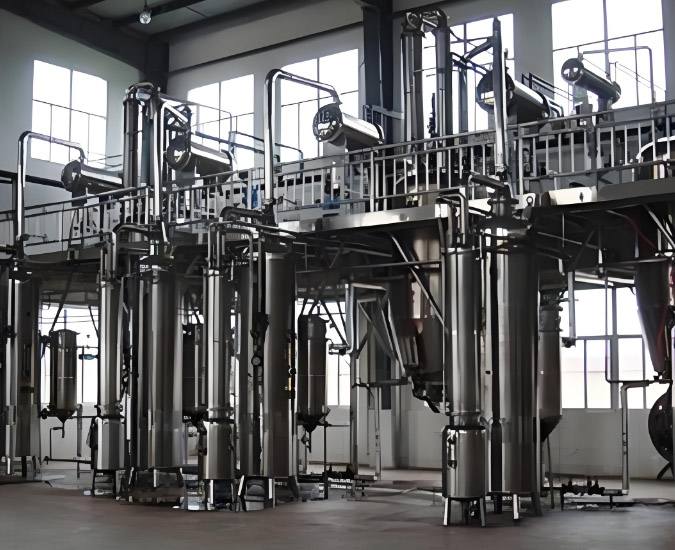

A deep dive into the high-viscosity hydrocolloid derived from the tubers of Amorphophallus konjac.
Featuring a high molecular mass ranging between 200,000 to 2,000,000 Daltons. It presents the highest water-holding capacity and viscosity among all natural dietary fibers, creating highly stable gels even at low concentrations.
Composed of D-mannose and D-glucose linked by β-(1→4) glycosidic bonds at a molar ratio of 1.6:1. Branching occurs via β-(1→6) glycosidic linkages every 50 to 60 units, which regulates its solubility and hydration speed.
Acetyl groups situated along the polymer chain render the native gum soluble. Under mild alkaline conditions and heat, these acetyl groups are cleaved, converting the soluble fiber into an irreversible heat-stable gel.
| Analytical Parameter | Standard Konjac Flour | Purified Glucomannan (90%+) | Pharmaceutical Grade KGM (95%+) |
|---|---|---|---|
| Glucomannan Content (Dry Basis) | ≥ 70.0% | ≥ 90.0% | ≥ 95.0% |
| Viscosity (1% Sol, mPa.s) | 15,000 - 25,000 | ≥ 30,000 | ≥ 36,000 |
| Loss on Drying | ≤ 12.0% | ≤ 10.0% | ≤ 8.0% |
| Total Ash Content | ≤ 5.0% | ≤ 3.0% | ≤ 1.5% |
| Heavy Metals (as Pb) | ≤ 5.0 ppm | ≤ 1.0 ppm | ≤ 0.5 ppm |
| Arsenic (As) | ≤ 1.0 ppm | ≤ 0.5 ppm | ≤ 0.2 ppm |
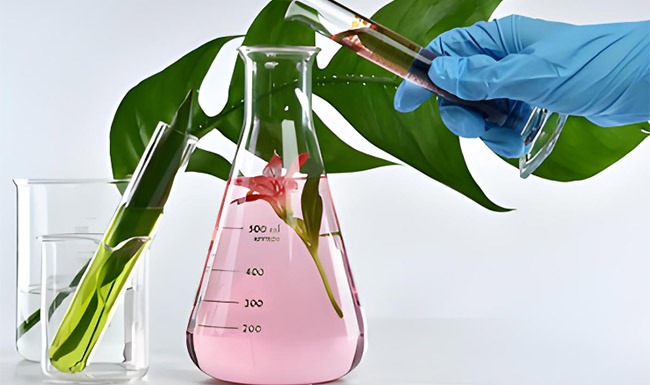
China accounts for over 70% of the world's commercial Konjac crop, cultivation, and refined glucomannan output. The unique microclimate of the mountainous southwestern regions (specifically the Yunnan-Guizhou Plateau) provides the optimal altitude, acidic soil, and humidity profiles required for cultivating heavy-yielding Amorphophallus konjac tubers.
Assessing glucomannan suppliers requires deep evaluation of microbiological limits, rheological performance, and contaminants.
We run extensive sterilization and irradiation protocols keeping Total Plate Count (TPC) below 1,000 cfu/g, and Yeast & Mold below 100 cfu/g. Free of Salmonella, E. Coli, and pathogenic enterobacteria.
Traditional dry-milled konjac contains high levels of SO2 residues used as whitening agents. Our extraction processes utilize physical purification to achieve SO2 concentrations below 10 ppm, conforming to EU E425 regulations.
Offering tailored mesh sizes from 80 mesh (slower hydration for meat products) up to 200 mesh (super-fine, rapid hydration for instant beverages, medical suspensions, and dietary drink mixes).
How global enterprises leverage glucomannan properties inside target consumer sectors.
Glucomannan is EFSA approved for body weight reduction. In tablets and capsule formulations, it acts as a bulking agent. Once ingested, it absorbs water and expands in the stomach, creating a high-viscosity gel structure that delays gastric emptying and promotes prolonged satiety.
Replaces synthetic thickeners and modified starches in vegan meats, low-carb shirataki noodles, and gelled desserts. Acts as a synergestic hydrocolloid with carrageenan and xanthan gum to provide elastic, stable, freeze-thaw resistant gel matrices.
Used in controlled-release drug delivery systems. The high molecular weight polymer matrix acts as an erosion-controlled barrier, modulating the dissolution rate of active pharmaceutical ingredients (APIs).
As a natural humectant, glucomannan forms a light breathable film over the skin barrier, retaining moisture without feeling tacky. Ideal for clean-label organic creams, natural peel-off facial masks, and water-in-oil emulsions.
Importing ingredients demands deep regulatory alignment. At TRB, we facilitate cross-border supply chain operations by providing extensive documentation packages for regulatory authorities worldwide (FDA, EFSA, CFIA).

The future of hydrocolloids is guided by clean labels, chemical modification breakthroughs, and AI-driven custom formulations.
Transitioning from alkaline processing to targeted enzymatic deacetylation. This green chemistry approach offers precise control over water absorption kinetics and gelation temperature thresholds.
Developing depolymerized glucomannan (low molecular weight) that offers the prebiotic advantages of soluble dietary fiber without the excessive viscosity, ideal for high-dosage functional drinks.
Utilizing neural network models to predict the synergic rheology of glucomannan-starch matrices, enabling customized gel textures for plant-based seafood and premium meat alternatives.
Expert technical answers addressing common procurement and formulation queries.
Connect with TRB's technical export sales team for specification matching, product samples, or factory pricing sheets.
Pioneer Bio-Park, No 127 North Road Xishan Bridge, Yu Hua Tai District, Nanjing, China 210012
Social Media Networks:


Primary Line: +86-25-52863298
Direct Account Executive: +86-13770771528
Fax Line: +86-25-52867040