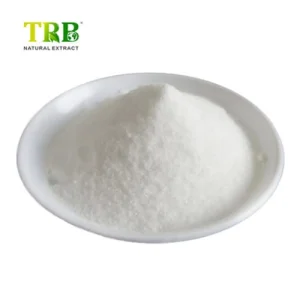
Explore our premium product portfolio engineered for stability, biological activity, and maximum formulation efficacy. Global distribution networks ensure seamless delivery.
The global shift toward high-efficacy, bio-compatible, and dermatologically proven cosmeceutical active ingredients.
Alpha Arbutin (4-Hydroxyphenyl-alpha-D-glucopyranoside) represents the cutting edge of functional whitening agents. By targeting the human skin's melanin biosynthesis through direct, competitive inhibition of key catalytic sites on the Tyrosinase enzyme, Alpha Arbutin achieves clinical-grade hyperpigmentation control without the cytotoxic side effects associated with historic benchmark agents like Hydroquinone.
The global cosmetics formulation market is undergoing a structural transition. Consumer demands are shifting rapidly toward clean beauty, ingredient transparency, and clinically backed efficacy. Market projections point to a compounded annual growth rate (CAGR) of over 6.8% for skin-brightening actives, with high-purity Alpha Arbutin leading the specialty chemical segment. Crucial drivers include rising demand for pigmentation correction, age spot reduction, and post-inflammatory erythema solutions in both East Asian and North American markets.
The technical production of high-performance Alpha Arbutin has migrated from classic, resource-intensive chemical synthesis to advanced enzymatic transglucosylation. Biocatalytic methods employ bacterial enzymes (such as alpha-glucosidase or amylase) to selectively attach a glucosyl donor (such as maltodextrin or sucrose) to a hydroquinone acceptor.
This biological process yields the pure alpha-epimer, completely avoiding the unwanted beta-epimer which exhibits vastly lower efficacy and higher cytotoxicity risks. The biocatalytic approach ensures the complete absence of residual raw hydroquinone (restricted below 10ppm under strict EU SCCS regulations), enhancing biological safety profiles, preserving purity, and delivering exceptional thermal stability in various topical applications.
Integrating Alpha Arbutin into premium topical formulations requires meticulous stabilization strategies. Although vastly more stable than its beta counterpart, Alpha Arbutin is susceptible to hydrolytic cleavage back into hydroquinone under high temperatures or outside its optimal pH range (3.5 - 6.5).
Modern formulation methodologies protect the compound using liposomal encapsulation, micro-emulsions, or by pairing the active with specific chelators and antioxidants. Combining Alpha Arbutin with synergistic compounds like Niacinamide, Acetyl Glucosamine, or low-molecular-weight Hyaluronic Acid establishes a comprehensive, multi-pathway mechanism that accelerates skin brightening, improves absorption, and guarantees product safety throughout its commercial shelf life.
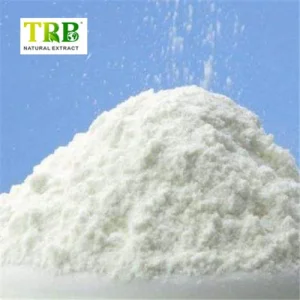
| Parameter / Quality Metric | Alpha-Arbutin Industrial Standard | TRB Premium Grade Specifications | Analytical Verification Method |
|---|---|---|---|
| Appearance | White crystalline powder | Conforms / High crystalline purity | Visual Inspection |
| Assay Purity (dry basis) | ≥ 98.0% | ≥ 99.5% (High HPLC Grade) | HPLC (High Performance Liquid Chromatography) |
| Specific Optical Rotation | +174° to +184° | +179.5° to +182.0° | Polarimetry |
| pH Value (1% water solution) | 5.0 - 7.0 | 5.5 - 6.5 | Potentiometric pH Meter |
| Free Hydroquinone Limit | < 50 ppm | < 10 ppm (Ultra-Safe formulation) | HPLC-UV detection |
| Heavy Metals (as Pb) | < 10 ppm | < 2 ppm | ICP-MS (Inductively Coupled Plasma Mass Spec) |
| Loss on Drying | ≤ 0.5% | ≤ 0.25% | Gravimetric analysis (105°C) |
As a leading manufacturer and exporter in China with over 20 years of technical expertise, TRB has established a world-class manufacturing, research, and development infrastructure. We integrate state-of-the-art biological extraction and organic synthesis pathways to supply high-purity functional ingredients to international pharmaceutical, cosmeceutical, and nutraceutical brands.
Recognized for our unwavering commitment to manufacturing excellence, safety compliance, and technological innovation, TRB was proudly awarded the 2026 "Global Biotechnology and Life Sciences Award" - "Best Global Herbal Extract Provider 2026".
TRB operates three advanced production facilities designed to meet stringent global standards: a dedicated high-throughput plant extraction facility, an advanced bee product processing factory, and an animal extract production unit. Our entire manufacturing ecosystem is supported by international quality and safety certifications, including: GMP, ISO, HACCP, ORGANIC, FDA, HALAL, and KOSHER.
In recent years, our research divisions have focused on high-demand wellness developments, including Brain Health Herb Extracts, Anti-Aging Herb Extracts, and Longevity Herb Extracts, gaining substantial praise and strong performance feedback from cosmetic formulators and consumer brands globally.
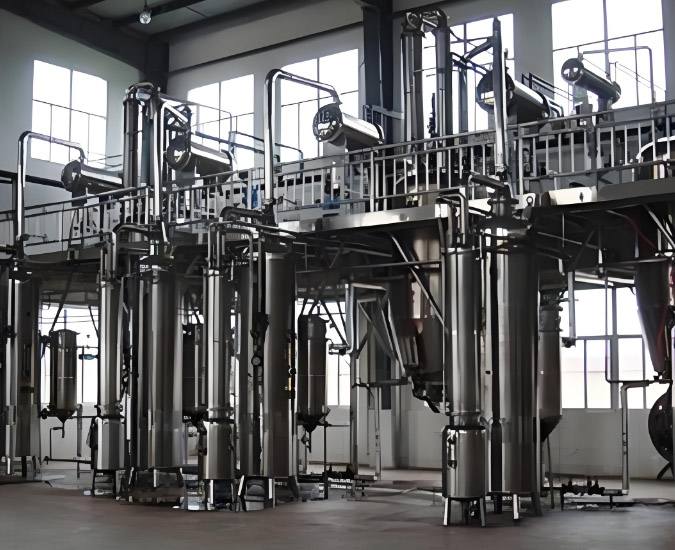
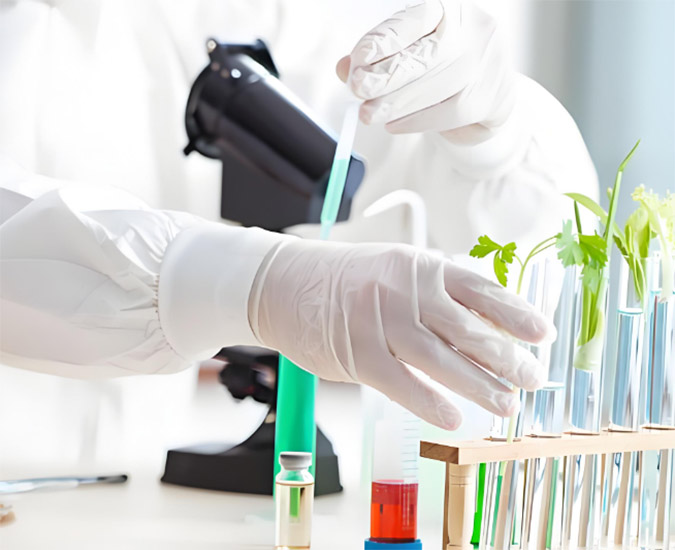
Our dedicated biocatalysis labs feature state-of-the-art equipment designed to isolate high-purity active compounds under highly controlled conditions. By avoiding traditional chemical solvents, TRB produces cosmetic-grade active ingredients that satisfy the industry's most rigorous global regulatory demands.
Every product batch is analyzed using high-performance liquid chromatography (HPLC), UV-Vis spectrophotometry, and inductively coupled plasma mass spectrometry (ICP-MS) to guarantee chemical profile consistency, trace-impurity control, and micro-biological safety.
We are dedicated to the research, development, and scaling of pure natural plant extracts and biological derivatives, contributing to the health, wellness, and beauty of humanity worldwide.
Expert manufacturing blueprints for developing next-generation cosmeceutical formulations.
Developing stable formulations requires carefully maintaining chemical stability and preventing active ingredient oxidation. Alpha Arbutin remains highly stable at water temperatures below 40°C when formulated within a pH range of 4.5 to 6.5.
Adding a synergistic antioxidant, such as Sodium Metabisulfite (typically 0.01% to 0.1%) or Tocopherol (Vitamin E), prevents discoloration and maintains product stability. Combining Alpha Arbutin with Niacinamide (Vitamin B3) at a 2% to 5% concentration yields a multi-target depigmentation system that inhibits both melanin synthesis and transfer.
Regulatory frameworks around the world prioritize safety and trace impurity limits. The European Scientific Committee on Consumer Safety (SCCS) restricts the concentration of Alpha Arbutin in cosmetic products to a maximum of 2.0% in facial creams and 0.5% in body lotions.
Importantly, regulatory guidelines require that residual free Hydroquinone remains below 10ppm in raw cosmetic materials. TRB's advanced enzymatic transglucosylation process consistently limits residual hydroquinone to undetectable or sub-10ppm levels, ensuring seamless compliance across EU REACH, US FDA, and China NMPA cosmetics regulations.
The future of cosmetic ingredient manufacturing lies in synthetic biology. R&D initiatives are focused on engineered microorganisms capable of direct fermentation, eliminating the need for extracted raw hydroquinone.
TRB is investing in next-generation biocatalysis platforms to develop sustainable, carbon-neutral, plant-derived sugars. These innovations aim to reduce carbon footprints while maintaining the chemical purity and structural integrity of the active ingredients.
TRB ingredients are trusted by formulating labs and brands across more than 60 countries. We construct dedicated global logistics routes that secure temperature integrity and safeguard the stability of our physiological cosmetic ingredients.
Each shipment is accompanied by a comprehensive Certificate of Analysis (COA), Safety Data Sheet (SDS), and botanical tracing documents. Partnering with TRB guarantees long-term supply stability, robust regulatory support, and consistent chemical properties for your product lines.

Comprehensive answers to critical formulation, stability, safety, and supply chain questions.
A selected range of botanical derivatives, standard herbal extracts, and premium chemical precursors for industrial formulations.
Get in touch with our commercial and technical sales teams to request batch samples, technical specifications, or customized formulation quotes.
Pioneer Bio-Park, No 127 North Road Xishan Bridge,
Yu Hua Tai District, Nanjing, China 210012
Main Office: 86-25-52863298
Mobile/Whatsapp: 86-13770771528
Fax: 86-25-52867040
General Enquiries: [email protected]
Export & B2B Sales: [email protected]
Stay Connected