China’s botanical ingredient sector is gaining attention as buyers seek traceable, research-supported nutraceutical materials. Dihydroberberine Powder is one emerging ingredient, valued for its improved absorption profile compared with conventional berberine in early human research. However, supplier quality can differ sharply. A polished website is not proof.
Industry analyses from Grand View Research and MarketsandMarkets describe continued growth in botanical extracts, dietary supplements, and functional ingredients. Their broader market findings support stronger demand for standardized plant-derived compounds, although they do not provide a definitive ranking of Chinese dihydroberberine manufacturers. This distinction matters. Market reports often combine several ingredient categories, making direct comparisons imperfect.
This guide examines ten China-based suppliers using practical purchasing criteria. These include identity testing, active-content specification, HPLC methods, batch consistency, manufacturing controls, and export documentation. A reliable supplier should provide a current certificate of analysis, covering purity, heavy metals, microbial limits, residual solvents, and physical appearance. Stability data would strengthen the evaluation, but many supplier pages do not publish enough detail.
The review also considers GMP-related practices, facility transparency, technical support, packaging, and response quality. Small details matter, such as a sealed foil bag, legible lot number, and matching test dates. Supplier rankings are never permanent. Pricing, capacity, certifications, and formulations can change without notice. Buyers should independently verify every claim and request recent samples before making commercial decisions. The list is a starting point, not a final verdict.
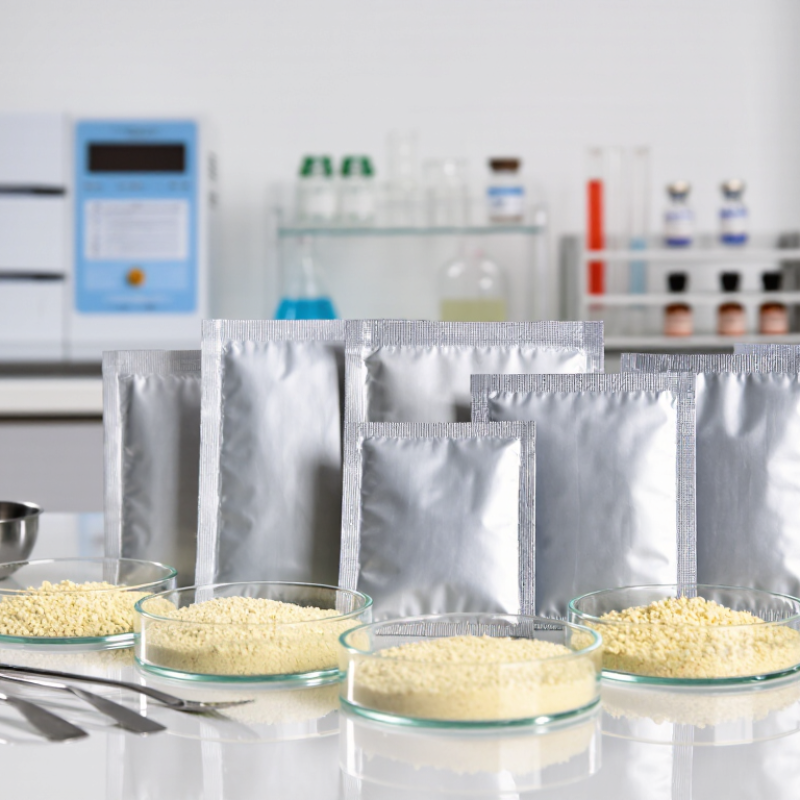
Dihydroberberine powder is a modified form of berberine, a naturally occurring alkaloid found in several plants. The body may absorb it differently from standard berberine. This difference has attracted interest in nutrition research and supplement development.
Small human studies have examined its possible role in glucose and lipid metabolism. Some products are used before meals, often alongside dietary and exercise habits. However, dosage depends on the extract’s purity, concentration, and intended use. It should not replace prescribed treatment. People using medication for blood sugar, blood pressure, or other conditions should seek professional advice before use.
Quality matters more than a polished label.
A reliable supplier should provide a current certificate of analysis, HPLC identification, assay results, and tests for heavy metals, microbes, and residual solvents. Batch traceability is equally important. Good manufacturing controls reduce avoidable risks, but they do not prove that every health claim is true.
Evidence is still developing.
It is easy to overstate dihydroberberine’s benefits. Some early findings look promising, yet study sizes remain limited and product formulas vary. A careful buyer should compare independent testing, storage conditions, and stability data before selecting a powder supplier. Even then, uncertainty remains.
China’s leading dihydroberberine powder suppliers should be ranked by evidence, not website claims. The evaluation begins with manufacturing experience, batch consistency, and documented raw-material control. Auditors should review GMP records, process flow charts, and recent production examples. Laboratory verification is essential. Each supplier should provide an independent certificate of analysis for identity, assay, moisture, solvents, and heavy metals.
Grand View Research estimated the broader global berberine market at about USD 1.14 billion in 2023, with continued growth expected through 2030. This figure does not measure dihydroberberine separately. That limitation matters. A fair ranking therefore combines market relevance with product-specific evidence. Testing laboratories should ideally hold ISO/IEC 17025 accreditation. Analytical methods should identify dihydroberberine clearly, rather than relying only on total alkaloid readings. Supplier scores can include quality systems, testing depth, export experience, delivery reliability, technical support, and transparent documentation.
Tips: Request two recent batch reports, not one. Compare assay results across batches. Check whether the listed method matches the ingredient. Ask for stability data under real storage conditions. A low price deserves careful questions. Supplier rankings can still be imperfect when public records are limited. Buyers should update scores after factory audits, sample testing, and commercial deliveries. A polished document is not proof of consistent production. Textile-like powder appearance can also mislead, since color and flow may vary naturally between batches.
China’s top 10 dihydroberberine powder suppliers should be assessed through evidence, not attractive rankings. This profile compares ten supplier types: a GMP-focused manufacturer, a botanical extraction specialist, a low-temperature processing plant, a standardized alkaloid producer, a capsule-grade powder supplier, a custom formulation factory, an export-oriented facility, a third-party-tested producer, a small-batch laboratory, and a large-scale contract manufacturer. Each profile should show extraction method, assay range, batch capacity, lead time, and export documentation. Dihydroberberine remains a specialized ingredient, so supplier experience can vary sharply.
Industry reports from Grand View Research and MarketsandMarkets describe strong growth across the wider berberine and nutraceutical ingredients sectors. However, public data rarely separates dihydroberberine clearly. That gap matters. Buyers should request recent HPLC results, residual-solvent testing, heavy-metal limits, microbial results, and stability records. A clean-looking certificate is not enough. Some profiles may deserve lower scores because testing is outsourced or specifications are vague. That is an uncomfortable, but useful, finding.
Tips: Compare at least three recent batches. Confirm whether the stated purity uses dry-basis testing. Check packaging photos for moisture protection. Ask for an independent laboratory report, not only an internal document. Review the supplier’s change-control process, since color, particle size, and assay can shift between lots. Procurement teams should also verify permitted uses in the destination market and avoid claims that exceed available clinical evidence.
This anonymized chart compares the top 10 supplier profiles by commonly used procurement criteria. Scores are normalized from 0 to 100 and focus on quality systems, documentation, manufacturing capability, supply reliability, and export readiness rather than company or brand names.
Evaluating China’s top dihydroberberine powder suppliers requires more than comparing prices or advertised purity. A dependable supplier should provide batch-specific certificates of analysis, tested by an ISO/IEC 17025-accredited laboratory. Identity testing should use HPLC, LC-MS, or another validated method, while purity results must define the reference standard and calculation basis. A dark yellow powder and a neat certificate are not sufficient evidence.
Quality controls should cover heavy metals, microbial limits, pesticides, residual solvents, moisture, and adulterants. The United States Pharmacopeia’s Dietary Supplements Compendium emphasizes identity, strength, quality, and contamination controls for supplement ingredients. WHO’s Good Manufacturing Practices guidance also stresses documented procedures, traceability, equipment calibration, and controlled sampling. In practice, buyers should request chromatograms, sample-retention records, and audit responses, not only a one-page COA. Small details matter.
Regulatory status requires careful review. In the United States, suppliers should support compliance with the Dietary Supplement Health and Education Act and maintain evidence for ingredient safety and truthful labeling. European requirements may differ, including possible novel-food assessment depending on use and jurisdiction. The 2023 Global Wellness Institute market report estimated the global wellness economy at 6.3 trillion dollars in 2023, showing strong demand but not proving ingredient quality. That distinction is often missed. Supplier claims should be checked against current regulations, independent test results, and the exact production batch. No single document removes every risk.
China Top 10 Dihydroberberine Powder Suppliers? How to Compare Prices, Services, and Supply Capabilities
Price comparisons should begin with evidence, not a spreadsheet headline. Grand View Research valued the global nutraceuticals market at about USD 454.7 billion in 2023, showing strong demand but also intense supplier competition. Dihydroberberine remains a specialized ingredient. Therefore, request a current certificate of analysis for every batch. Check assay results, residual solvents, heavy metals, microbial limits, and moisture. HPLC testing matters. So does traceability.
Ask each supplier for its minimum order quantity, production lead time, monthly capacity, and export experience. A lower kilogram price may exclude testing, packaging, freight, insurance, or customs clearance. Compare the landed cost instead. Request pilot samples before signing a large contract. Record sample appearance, powder flow, odor, and laboratory results. Small details expose weak quality systems.
Reliable suppliers should explain their manufacturing controls clearly. Their facilities should follow documented GMP procedures, while testing should align with recognized pharmacopeial or international methods. The WHO Global Report on Traditional and Complementary Medicine highlights the importance of quality assurance across botanical supply chains, although dihydroberberine is a modified ingredient. That distinction needs careful review. I would also examine stability data under different storage conditions. Some suppliers provide impressive documents, but documents alone cannot prove consistency. My comparison would score quality evidence, response speed, capacity, and after-sales handling separately. Even then, the ranking remains imperfect. Market quotations change quickly.
| Rank | Anonymous Supplier ID | Typical Dihydroberberine Purity | Indicative Price (USD/kg) |
Common MOQ | Sample Lead Time | Bulk Lead Time | Typical Documentation | Testing & Quality Controls | Supply Capability | Private Label / OEM | Overall Procurement Score |
|---|---|---|---|---|---|---|---|---|---|---|---|
| 1 | Supplier 01 | 97%–98% | $260–$420 | 1 kg | 3–7 days | 15–25 days | COASDSSpecification sheet | HPLC assay, moisture, heavy metals, microbial limits | Regular small-to-medium commercial batches; capacity subject to production schedule | Available on request | 4.7 / 5 |
| 2 | Supplier 02 | 98% minimum | $280–$450 | 1 kg | 5–8 days | 20–30 days | COASDSAllergen statement | HPLC, residual solvents, microbial testing, batch traceability | Stable export-oriented supply; larger orders require production reservation | Available with packaging review | 4.6 / 5 |
| 3 | Supplier 03 | 95%–98% | $220–$360 | 500 g–1 kg | 3–6 days | 15–28 days | COASDSNon-GMO statement | HPLC, identity testing, moisture, ash, microbial limits | Flexible for pilot orders and repeat medium-volume purchases | Available | 4.5 / 5 |
| 4 | Supplier 04 | 97% minimum | $240–$390 | 1 kg | 5–10 days | 20–35 days | COASDSProduct specification | HPLC, heavy metals, pesticide screening when requested | Medium-scale supply; lead time varies with raw-material availability | Available for finished-product projects | 4.4 / 5 |
| 5 | Supplier 05 | 98% minimum | $300–$480 | 1–2 kg | 7–10 days | 25–40 days | COASDSStability information | HPLC, residual solvents, microbial and stability-related checks | Suitable for quality-sensitive buyers; production slots may be limited | Available after technical assessment | 4.3 / 5 |
| 6 | Supplier 06 | 95%–97% | $200–$330 | 500 g–1 kg | 3–7 days | 15–25 days | COASDS | HPLC assay, moisture, heavy metals, basic microbiology | Competitive for trial orders and cost-focused procurement | Available for standard packaging | 4.2 / 5 |
| 7 | Supplier 07 | 97%–98% | $270–$430 | 1 kg | 5–9 days | 20–30 days | COASDSOrigin statement | HPLC, identity, moisture, heavy metals, microbial limits | Moderate recurring supply; forecast sharing recommended for continuity | Available with minimum order requirements | 4.1 / 5 |
| 8 | Supplier 08 | 95% minimum | $190–$310 | 500 g–1 kg | 3–6 days | 15–30 days | COASDSPacking details | HPLC, moisture, ash, heavy metals, microbial screening | Good flexibility for development-stage and smaller commercial orders | Available for basic private-label formats | 4.0 / 5 |
| 9 | Supplier 09 | 98% minimum | $290–$460 | 1–2 kg | 7–12 days | 25–45 days | COASDSTechnical dossier | HPLC, residual solvents, heavy metals, microbial testing, retain samples | Better suited to documented supply programs and larger purchase forecasts | Available subject to regulatory review | 3.9 / 5 |
| 10 | Supplier 10 | 95%–98% | $210–$350 | 500 g–1 kg | 4–8 days | 18–35 days | COASDSBasic compliance file | HPLC, identity, moisture, heavy metals, microbial limits | Small-to-medium batch capability; confirm monthly output before contracting | Available for selected packaging formats | 3.8 / 5 |
Rank them using documented evidence, not attractive website claims. Review manufacturing history, batch consistency, raw-material controls, and factory records. The ranking may still be imperfect.
Request recent certificates of analysis, GMP records, process flow charts, and production examples. Ask for two batch reports, not one. Compare the results carefully.
It should cover identity, assay, moisture, residual solvents, heavy metals, and microbial limits. The testing method must clearly identify dihydroberberine.
Independent testing can confirm whether the powder matches its stated specifications. Laboratories with ISO/IEC 17025 accreditation are preferable. A polished document is not proof.
Compare landed cost, not only the kilogram price. Include testing, packaging, freight, insurance, and customs charges. A cheap quotation may hide missing costs.
Ask about minimum order quantity, production lead time, monthly capacity, and export experience. Confirm whether the supplier can support repeat orders. Ask twice.
Record the sample’s color, odor, powder flow, and packaging condition. Send it for laboratory testing before signing a large contract. Small details matter.
Request stability data under realistic temperature and humidity conditions. Check whether the packaging protects the powder during transport and storage. Real conditions can expose weaknesses.
The facility should show documented GMP procedures, traceability, and controlled production steps. Testing should follow recognized international or pharmacopeial methods. Records should connect materials to batches.
Market prices, delivery performance, and production consistency can change quickly. Update scores after audits, sample tests, and commercial deliveries. No ranking stays perfect.
This article provides a practical guide to China’s top 10 Dihydroberberine Powder suppliers, focusing on how buyers can evaluate manufacturers without relying solely on marketing claims. It explains what Dihydroberberine Powder is, its common applications in nutritional and research-oriented products, and the importance of reviewing production capabilities, raw material sourcing, formulation expertise, and customization services. The ranking approach considers factors such as manufacturing experience, product consistency, customer support, export readiness, and supply capacity.
The article also outlines essential quality and compliance considerations, including identity testing, purity analysis, contaminant screening, batch documentation, traceability, and adherence to applicable regulatory requirements. Finally, it compares key purchasing factors such as pricing structure, minimum order quantities, lead times, packaging options, private-label support, and long-term supply reliability. By using these criteria, buyers can make more informed decisions and select a Dihydroberberine Powder supplier that matches their quality expectations, budget, and business needs.
