How to Find Reliable Celastrol Powder Suppliers in 2026?

Time:2026-09-29 Author:Oliver
0%

Finding a dependable Celastrol Powder supplier in 2026 requires more than comparing prices. Research buyers need clear evidence, consistent communication, and realistic product information. A polished website is not enough. Supplier quality must be tested through documents, samples, and practical questions.

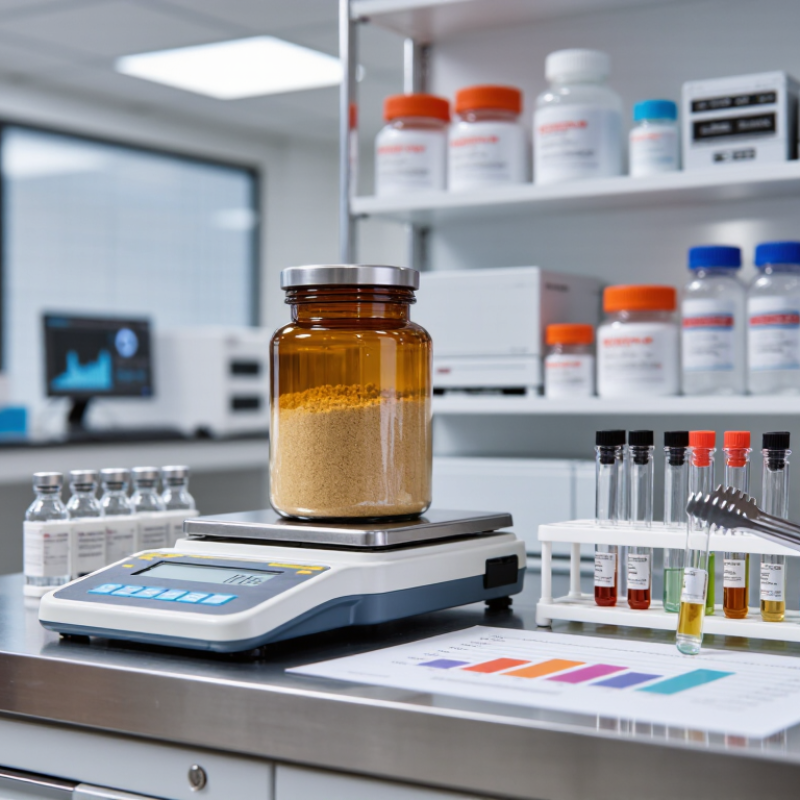
Look for a company that identifies its manufacturing site, batch number, and quality-control process. Request a recent certificate of analysis with HPLC results, purity data, testing dates, and the tested lot number. Independent laboratory verification adds credibility. The powder should arrive in suitable packaging, such as a sealed amber container, with storage instructions and a visible label. Ask how the supplier controls moisture, temperature, contamination, and shipment conditions. A reliable supplier should explain these details without avoiding difficult questions.

No supplier is perfect. Documents may be incomplete. Results can also vary between laboratories. That is why responsible buyers should compare several batches and review the supplier’s response carefully. Verify business registration, traceability records, refund policies, and compliance with applicable local regulations. Celastrol Powder should be purchased only for lawful, qualified research or other permitted uses. It should not be promoted as an approved treatment or consumed without appropriate professional and regulatory guidance. This guide examines practical screening methods, warning signs, and verification steps for choosing a more trustworthy supplier in 2026. Some decisions will remain uncertain. Careful skepticism is still useful.
How to Find Reliable Celastrol Powder Suppliers in 2026?

Verify Celastrol Identity: CAS 34157-83-0 and Molecular Weight 450.61 g/mol

When searching for reliable celastrol powder suppliers in 2026, identity verification should come before price comparisons. The reference CAS number is 34157-83-0, and the stated molecular weight is 450.61 g/mol. These details should appear consistently on the product specification, certificate of analysis, and shipment label.

Do not rely on a generic certificate alone. Request a batch-specific document showing the tested lot number, test date, analytical method, and laboratory approval. High-performance liquid chromatography can support purity assessment, while mass spectrometry can help confirm the expected molecular mass. Nuclear magnetic resonance testing may provide stronger structural evidence when identity is uncertain. The reported molecular weight should match 450.61 g/mol, allowing only reasonable method-related variation.

Check the paperwork carefully.

A reliable supplier should explain sample handling, storage conditions, and retest policies without vague language. Compare the CAS number across every document; one incorrect digit can signal poor quality control. I have found that polished documents can still hide missing raw data, so independent testing remains sensible for valuable purchases. Supplier audits, traceable batch records, and clear communication also support responsible sourcing. No single test answers everything. A practical review combines identity, purity, appearance, and stability information before approval.

Set an HPLC Purity Benchmark, Such as Buyer-Specified ≥98%

Finding reliable celastrol powder suppliers in 2026 begins with a measurable purity rule. Set an HPLC benchmark, such as buyer-specified ≥98%, before requesting quotations. Ask suppliers to explain whether purity uses area normalization or another validated calculation. The percentage alone is not enough. Request a recent chromatogram, test date, batch number, reference standard, and complete certificate of analysis. A professional supplier should also disclose the HPLC column, mobile phase, detection wavelength, and acceptance criteria. Without these details, comparisons become guesswork.

Tips: Ask for a sealed retention sample from the same batch. Send it to an independent laboratory for confirmation. Compare its result with the supplier’s report, not only the headline number. Check identity testing, residual solvents, heavy metals, moisture, and storage conditions. Keep records of packaging photos, sample labels, and communication dates. Small details matter.

Supplier reliability also depends on consistency across batches. Request results from several recent lots, if available. A single 98% report does not prove long-term control. I have learned that polished paperwork can still be incomplete. Ask difficult questions politely. Verify the testing method before trusting the certificate. Confirm that the powder was protected from heat, light, and humidity during shipping. If a supplier avoids technical answers or changes specifications without explanation, pause the purchase. A clear benchmark protects quality decisions.

How to Find Reliable Celastrol Powder Suppliers in 2026? - Set an HPLC Purity Benchmark, Such as Buyer-Specified ≥98%

Evaluation dimension Practical benchmark or question Evidence to request Why it matters
HPLC purity Set a buyer-defined acceptance limit, for example, ≥98% by HPLC peak-area normalization. Confirm the method and calculation basis before ordering. Batch-specific certificate of analysis (CoA), chromatogram, analytical method, and integration details. “Purity” can mean different things; peak-area percentage is not necessarily the same as mass fraction or assay.
Identity confirmation Ask how the supplier confirms that the material is celastrol and whether the result is linked to the supplied batch. Suitable identity data, such as an LC-MS result and/or spectroscopic data, with reference or interpretation information where available. A high chromatographic purity result alone does not establish compound identity.
Method suitability Check that the HPLC method specifies the column, mobile phase, detection conditions, and sample preparation; ask whether the method is validated or verified for its intended use. Method summary or controlled procedure, plus relevant system-suitability or method-performance records. Results from different methods may not be directly comparable.
Batch traceability Require a unique lot number and consistent identifiers on the label, CoA, invoice, and shipping documents. Lot-specific records and a documented process for retaining or retrieving batch documentation. Traceability supports investigation of discrepancies and repeat-order consistency.
Impurity and contaminant controls Define any relevant residual-solvent, elemental-impurity, or microbiological requirements based on the intended use and applicable regulations. Risk-based test results or a documented rationale for tests not performed; review applicable limits with a qualified compliance professional. A stated HPLC purity value does not address every potential contaminant.
Storage and shipping Obtain the supplier’s recommended storage conditions, packaging details, and any shipping precautions for the product. Product label, handling instructions, packaging description, and available stability or retest information. Appropriate handling helps protect material quality during storage and transport.
Sample and incoming verification Where practical, assess a representative sample before committing to a larger purchase and define incoming acceptance tests in advance. Sample documentation, agreed specifications, and a plan for independent testing when required. Pre-agreed checks make acceptance decisions clearer and reduce avoidable disputes.
Supplier documentation Ask for clear product specifications, document revision dates, and prompt responses to technical questions. Specification sheet, current CoA, safety data sheet where applicable, and written clarification of claims. Complete, consistent records make technical and purchasing review more reliable.

Note: The ≥98% HPLC value is an example of a buyer-specified purchasing criterion, not a universal regulatory or industry requirement. Confirm specifications and intended-use requirements before purchase.

Validate Certificates of Analysis Through ISO/IEC 17025-Accredited Testing

A reliable celastrol powder supplier should provide more than a polished certificate. Ask for a Certificate of Analysis issued by an ISO/IEC 17025-accredited laboratory. This accreditation confirms technical competence, validated methods, equipment control, and traceable measurements. The ILAC MRA Annual Report 2024 recorded international recognition across more than 100 economies. That reach helps buyers compare laboratory results across borders.

Check the laboratory’s accreditation scope carefully. It should include the tested analyte, matrix, and analytical technique. A laboratory may hold accreditation but lack scope for celastrol testing. Review the method number, sample identification, testing date, and measurement uncertainty. High-performance liquid chromatography should include system suitability data and reference-standard information. I would also request raw chromatograms, not only a final purity percentage. A clean-looking document can still hide weak sampling. This is where buyers often become too trusting.

Tips: Verify the laboratory directly through its accreditation body. Match the batch number on the certificate with the sealed container. Ask for heavy-metal, residual-solvent, microbial, and identity results when relevant. Compare results with ISO/IEC 17025 requirements and the Eurachem Guide on measurement uncertainty. Keep a retained sample for independent confirmation. No shortcut is perfect. A second test may expose an earlier assumption.

Assess GMP Practices, Batch Traceability, and Supplier Documentation

When evaluating celastrol powder suppliers in 2026, ask for evidence of a functioning quality system, not just a GMP claim. Request the applicable GMP certificate, its issuing body, scope, site address, and expiry date. Confirm these details directly with the issuer where possible. A certificate may cover a facility without covering every activity or product.

Batch traceability should connect the raw material to its source, processing dates, and finished-lot number. Ask for a sample batch record, a certificate of analysis, and test methods for identity, purity, and contaminants. Check that the lot number matches across documents.

WHO reports that an estimated one in ten medical products in low- and middle-income countries is substandard or falsified; this broad estimate is not specific to celastrol, but it underscores why verification matters (WHO, “Substandard and falsified medical products,” 2024).

Paperwork alone is not proof.

Review audit findings, corrective-action records, change-control procedures, and document revision dates. For added context, ISO’s 2022 Survey counted more than 1.26 million valid ISO 9001 certificates worldwide. That figure reflects broad quality-system adoption, not celastrol quality or GMP compliance.

Ask what happened when a prior batch failed specification, and how the supplier documented the response. Real records can be imperfect. Missing links or unexplained edits deserve follow-up.

Review Safety, Storage, and Shipping Controls for Celastrol Powder

How to Find Reliable Celastrol Powder Suppliers in 2026?

For celastrol powder, supplier review should start with evidence, not polished product photos. Ask for a batch-specific certificate of analysis, safety data sheet, identity results, and the analytical method used. Check whether an independent laboratory verified the batch; a purity figure alone does not confirm identity or handling quality. Small details matter. A perfect-looking certificate can still leave questions.

Storage claims need context. ICH Q1A(R2) uses 40°C ± 2°C and 75% ± 5% relative humidity for six-month accelerated stability studies. These are testing conditions, not recommended storage conditions for celastrol. Ask the supplier for product-specific, stability-backed instructions, including light, moisture, and temperature limits. During shipment, request sealed, protective packaging and temperature records when the stated conditions require them. WHO’s Technical Report Series 961, Annex 9, emphasizes controlled, documented handling for temperature-sensitive products. Not every powder needs cold shipping; unsupported chilling can create condensation risks.

Review the SDS for handling precautions, spill response, and protective equipment, then check that the shipping documentation matches the actual package. On arrival, record the seal condition and any temperature excursions before accepting the batch. Keep the original label and lot number with storage records. I would not treat a supplier’s general webpage as proof of stability; it is an easy shortcut, and an unreliable one.

FAQS

What purity benchmark should buyers set for celastrol powder?

Set a measurable HPLC benchmark, such as buyer-specified purity of at least 98%. Ask whether the result uses area normalization or another validated calculation. The percentage alone proves little.

Which documents should a supplier provide?

Request a recent, batch-specific certificate of analysis and safety data sheet. The documents should show the test date, lot number, reference standard, and acceptance criteria. Ask for identity results too.

What HPLC details should appear on the test report?

The report should identify the HPLC column, mobile phase, and detection wavelength. It should also explain the calculation method and testing conditions. Missing details create guesswork.

How can buyers verify a supplier’s reported purity?

Request a sealed retention sample from the same production batch. Send it to an independent laboratory for confirmation. Compare both results, not only the headline purity number.

Should buyers review several production batches?

Yes, request results from several recent lots when available. One report showing 98% purity does not prove consistent manufacturing control. Patterns matter more than polished paperwork.

What safety and quality tests deserve attention?

Check identity, residual solvents, heavy metals, moisture, and storage conditions. Review the safety data sheet for handling, spill response, and protective equipment. Do not assume a purity result covers every risk.

What storage and shipping information should buyers request?

Ask for product-specific limits for temperature, light, and humidity. Request sealed protective packaging and temperature records when conditions require them. Not every powder needs cold shipping.

What should buyers inspect when the shipment arrives?

Record the seal condition, package appearance, lot number, and any temperature excursion. Keep the original label with the storage records. Photographs help.

What warning signs suggest pausing a purchase?

Pause if the supplier avoids technical questions or changes specifications without explanation. A general webpage is not stability evidence. I have learned that shortcut is weak.

Conclusion

Finding a reliable Celastrol Powder supplier in 2026 starts with confirming the material’s identity. Check that the supplier lists CAS 34157-83-0 and a molecular weight of 450.61 g/mol, then review the analytical method and purity specification. An HPLC benchmark such as buyer-specified purity of at least 98% can help establish clear acceptance criteria, provided the method and results are documented for the relevant batch.

Request a batch-specific Certificate of Analysis and verify that its results can be supported by testing from an ISO/IEC 17025-accredited laboratory. Assess the supplier’s GMP practices, batch traceability, and completeness of technical and quality documentation. Also confirm that handling instructions, storage conditions, packaging, and shipping controls are suitable for maintaining product quality. A careful review of these points supports a more informed supplier decision and helps set clear expectations before purchase.

Oliver

Oliver

Oliver is a seasoned marketing professional with a wealth of expertise in driving brand awareness and engagement. With a deep understanding of our company's product offerings, he consistently delivers high-quality content that enriches our professional blog. His insights not only shed light on......