
Lupeol Powder is attracting attention from nutraceutical, cosmetic, and botanical ingredient buyers. Its natural origin does not guarantee consistent quality. Buyers still need verified identity, purity, traceability, and responsible documentation.
Industry reports show broader botanical extract demand continues expanding. Grand View Research’s Botanical Extracts Market Size, Share & Trends Analysis Report, 2024–2030, highlights rising interest in plant-based functional ingredients. Mordor Intelligence’s Herbal Extracts Market report also identifies standardization and regulatory documentation as major purchasing considerations. These findings matter for Lupeol Powder, even though dedicated lupeol market statistics remain limited and sometimes inconsistent.
The science deserves careful language. Researcher Muhammad Saleem and colleagues described lupeol as “a novel anti-inflammatory and anti-cancer dietary triterpene” in their peer-reviewed review published in 2009. This statement reflects research interest, not permission to make medical claims. That distinction is important.
Quality begins with evidence.
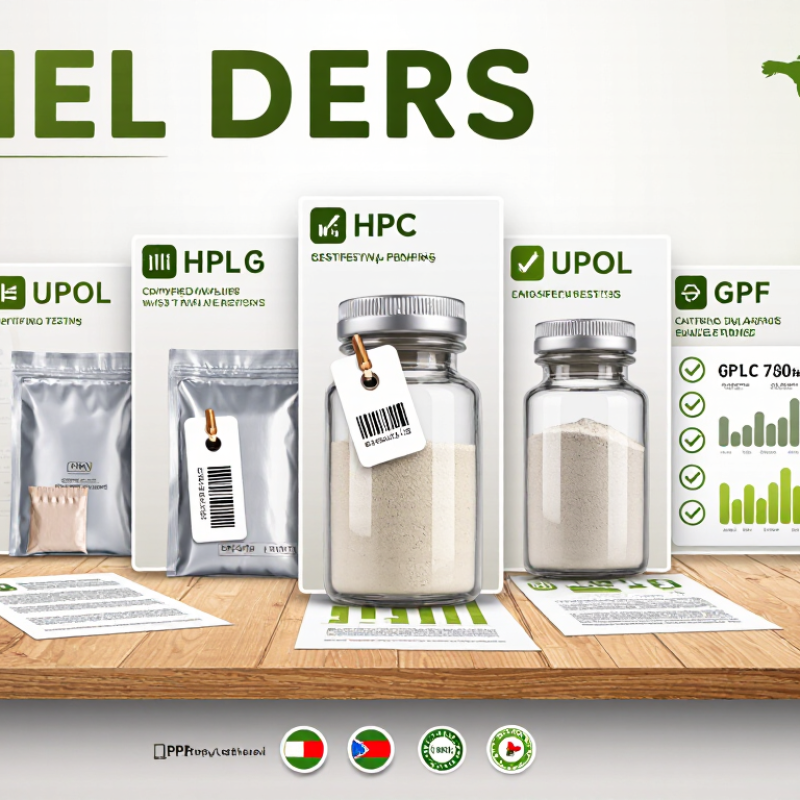
A dependable supplier should provide HPLC or HPTLC results, batch numbers, origin details, moisture data, and contaminant testing. GMP capability adds practical confidence, especially when products cross borders. Packaging also reveals experience: sealed foil bags, desiccant protection, and clear storage instructions help preserve powder stability.
The market is not perfectly transparent. Some supplier pages provide impressive purity claims without independent laboratory evidence. That weakness deserves scrutiny. This guide examines seven Lupeol Powder suppliers by comparing documentation, manufacturing capability, testing practices, export experience, and buyer support. The ranking is not absolute. A technically strong supplier may still be unsuitable for a buyer needing small trial quantities or region-specific compliance.
What Is Lupeol Powder and Why Is It Used?
Lupeol powder is a plant-derived pentacyclic triterpene. It occurs in mango peel, olives, birch bark, and several medicinal plants. Researchers study it for antioxidant, anti-inflammatory, and skin-supporting properties. These findings come mainly from laboratory and early-stage studies, not confirmed clinical treatment claims. A 2021 review in Biomedicine & Pharmacotherapy described lupeol’s broad pharmacological potential while noting the need for stronger human evidence. That caution matters.
Lupeol is used in botanical research, cosmetic formulation, and active-ingredient development. Cosmetic scientists may examine its role in soothing stressed skin or supporting antioxidant formulas. Pharmaceutical researchers also investigate its molecular pathways. However, powder quality can vary sharply between batches. The source plant, extraction solvent, drying temperature, and assay method all influence the final material. Small differences matter.
The World Health Organization reported that 170 of 194 member states acknowledged using traditional medicine in its 2019 global report. This supports continued interest in plant-based compounds, but it does not prove lupeol’s effectiveness. Global buyers should request HPLC assay results, moisture data, residual-solvent testing, heavy-metal limits, and microbial results. ICH Q3C guidance can help assess residual solvents. USP microbiological chapters offer useful testing references. Evidence remains uneven. A transparent certificate of analysis is essential, and one test result should never tell the whole story.
| No. | Supplier Profile | Best Fit for Global Buyers | Typical Lupeol Powder Offering | Primary Source Materials | Key Documents to Request | Important Buyer Checks |
|---|---|---|---|---|---|---|
| 1 | Standardized botanical-extract manufacturer | Supplement and functional-ingredient projects requiring a repeatable botanical profile |
Plant-derived powder with a declared lupeol specification and batch-level testing
Botanical origin Standardized extract |
Mango peel, shea-related plant material, olive material, or other documented lupeol-containing botanicals | Certificate of analysis, botanical identification, heavy-metal report, pesticide report, microbiological analysis, and residual-solvent statement | Confirm the botanical species, extraction solvent, marker-compound method, and whether the stated assay refers to lupeol or total triterpenes |
| 2 | Phytochemical isolation specialist | Research, analytical, and formulation work needing higher-purity isolated lupeol |
Isolated lupeol powder, commonly supplied as a white to off-white crystalline material
Research grade High-purity option |
Purified plant fractions obtained from lupeol-containing botanical sources | HPLC chromatogram, assay result, identity confirmation, moisture or loss-on-drying result, and impurity profile | Check analytical method validation, reference standard traceability, chromatographic purity, and lot-to-lot consistency |
| 3 | Nutraceutical ingredient supplier | Dietary-supplement developers evaluating triterpene ingredients |
Powder supplied with application and compliance support; commercial use depends on the destination market
Supplement development Regulatory review |
Documented plant extracts containing lupeol or purified lupeol prepared from botanical material | COA, allergen statement, GMO statement, food-contact or food-use declaration where applicable, and country-specific regulatory documents | Lupeol is not automatically approved as a food or supplement ingredient in every jurisdiction; complete a local regulatory assessment before commercialization |
| 4 | Cosmetic active-ingredient supplier | Skincare, haircare, and personal-care formulators investigating plant-derived triterpenes |
Cosmetic raw material supported by technical data and formulation guidance
Topical formulations Technical support |
Plant-derived lupeol fractions or isolated lupeol intended for cosmetic formulation research | Technical data sheet, SDS, COA, INCI assessment support, allergen information, and stability or compatibility data when available | Evaluate dispersibility, particle size, odor, color, oxidation sensitivity, and compatibility with the finished formulation |
| 5 | Custom synthesis and contract-manufacturing supplier | Buyers needing tailored purity, packaging, scale, or a specialized specification |
Made-to-order or scale-up batches with an agreed manufacturing specification
Custom specification Scale-up support |
Botanical isolation route or an appropriately documented chemical manufacturing route, subject to project scope | Manufacturing specification, process summary, validation or qualification package, batch records, COA, and change-control policy | Define acceptable impurities, residual solvents, particle-size limits, packaging, minimum order quantity, and delivery schedule in the quality agreement |
| 6 | GMP-oriented export ingredient distributor | International buyers seeking consolidated logistics and export documentation |
Stock or sourced material supplied with export, packaging, and traceability support
Global logistics Traceability |
Qualified botanical-extract or phytochemical manufacturing sources documented in the supply chain | COA, SDS, packing list, certificate of origin, transport conditions, batch traceability records, and applicable GMP evidence | Verify that the distributor can identify the actual manufacturer, preserve original batch numbers, and provide current—not template—quality documents |
| 7 | Small-batch research reagent supplier | Universities, laboratories, method-development teams, and early-stage product screening |
Small pack sizes intended for laboratory research rather than automatic human or animal consumption
R&D use Small quantity |
Purified lupeol obtained from a documented botanical or laboratory production route | Product specification, SDS, COA, chromatogram, storage guidance, and research-use labeling | Research-grade material should not be treated as food, pharmaceutical, or cosmetic grade without separate qualification and regulatory review |
Request a recent, batch-specific certificate of analysis. It should include assay, moisture, particle size, heavy metals, pesticides, residual solvents, and microbiological limits.
Prefer HPLC or LC-MS identity testing. A generic “plant extract” description is not enough evidence.
Check the botanical source, extraction ratio, origin country, lot number, and retest date. Keep every document linked to the shipment.
No. Traditional use does not prove chemical consistency. Plant species, harvest season, solvents, and storage can change the material.
Compare the cost per kilogram of active lupeol, not just powder price. Include testing, packaging, retesting, shipping, and payment terms.
Check the laboratory’s accreditation, test methods, and sample traceability. Confirm whether assay results use an as-is or dry basis.
Confirm customs classification with a qualified broker. Review the safety data sheet, invoice, origin certificate, and import requirements.
Use sealed, moisture-resistant packaging with clear lot numbers. Inspect packaging photographs and check protection against humidity.
Ask for three recent commercial references, typical lead times, minimum order quantities, and complaint records. Documents can look strong while batch discipline remains weak.
Sea freight may lower costs but face port delays. Air freight is faster, but handling fees and temperature exposure need review. Build a buffer. Perfect forecasts are rare.
Lupeol Powder is a plant-derived triterpenoid ingredient used in research, nutraceutical development, cosmetics, and other formulation applications. This guide explains its common uses, expected specifications, and the main factors global buyers should consider when selecting a supplier, including purity, source, production standards, batch consistency, documentation, and technical support. It also presents seven reliable supplier types and selection criteria without focusing on specific brand names.
Buyers can compare suppliers by reviewing quality certificates, testing methods, minimum order quantities, pricing transparency, packaging options, lead times, and international shipping capabilities. The article also outlines important considerations for importing Lupeol Powder, such as product specifications, certificates of analysis, safety data, labeling, customs documentation, stability testing, and destination-market compliance. Careful supplier verification and independent testing can help purchasers reduce risks and secure a consistent, properly documented material for legitimate commercial and research use.
